
The ROI of Wellness Housing: Why Forward-Thinking Companies Are Making the Switch

In the competitive landscape of 2026, the definition of "corporate housing" has undergone a radical transformation. For years, HR directors and operations managers viewed temporary housing as a simple logistical checkbox: find a bed, ensure there’s a roof, and stay under budget.
But as the lines between work and life continue to blur, forward-thinking organizations are realizing that the quality of an employee's environment directly dictates the quality of their output. We are no longer just talking about "perks"; we are talking about The ROI of Wellness Housing.
If you are still placing your relocating executives or traveling nurses in standard, cookie-cutter apartments, you might be paying an invisible tax on your bottom line. Here is why the shift to wellness-focused housing is the smartest financial move your company can make this year.
The Invisible Tax: What "Basic" Housing Costs Your Business
When an employee relocates to a new city like Dallas, they are already navigating a high-stress transition. If their temporary home is equipped with poor air filtration, harsh chemical cleaning residues, and subpar sleeping arrangements, their productivity doesn’t just plateau: it plummets.
Research into workplace wellbeing shows that environmental factors can influence cognitive performance by as much as 11%. When you multiply that across a 90-day relocation period for a high-salary executive, the "savings" found in a cheaper housing provider are quickly wiped out by:
Presenteeism: Being physically present but mentally drained due to poor sleep or environmental stressors.
Higher Absenteeism: Increased susceptibility to illness in spaces with poor air and water quality.
Burnout: The inability to properly "recharge" after hours, leading to a faster turnover rate.
At PBD Living, we’ve seen that companies prioritizing wellness housing aren't just being "nice": they are being strategic.
Calculating the Wellness Dividend: 3:1 to 6:1 ROI
The data is becoming impossible to ignore. According to 2026 benchmarks for employee wellness programs: of which housing is a critical extension: organizations are seeing an average ROI of $3 for every $1 invested. In some high-performance sectors, that return jumps to 6:1.

How does that translate to housing? Let’s look at the three primary drivers of this ROI:
1. The Productivity Boost
Air quality is the most underrated tool in your talent acquisition kit. Studies from Harvard’s environmental health researchers have consistently shown that better ventilation and lower CO2 levels lead to significantly higher scores in decision-making and crisis response.
By equipping every apartment with environmental sensors for air and water quality, we ensure your team is living in an environment that supports peak brain function. When your employee wakes up in a PBD Living apartment, they aren't just rested; they are cognitively primed.
2. Reduced "Friction" and Sick Days
The cost of a single sick day for a specialized role (like a traveling nurse or a software engineer) can range from $500 to $2,000 in lost value. Standard apartments often use industrial-strength cleaning chemicals that leave behind volatile organic compounds (VOCs).
We exclusively use sustainable, non-toxic cleaning products. By removing these invisible irritants, we reduce the likelihood of respiratory issues and headaches, keeping your team on the job and out of the clinic.
3. Talent Retention and the "Experience" Factor
In 2026, the "Employee Experience" is your strongest retention tool. When a new hire moves their life to Dallas, the first 30 days are critical. A seamless, high-touch housing experience: complete with 24/7 virtual concierge support and pet-friendly amenities: sends a clear message: We value your well-being.
The Science of the "Well-Stay"
It isn't just about the absence of bad things; it's about the presence of the right things. Wellness housing focuses on the "holistic recovery" of the employee.

Nutrition and Recovery
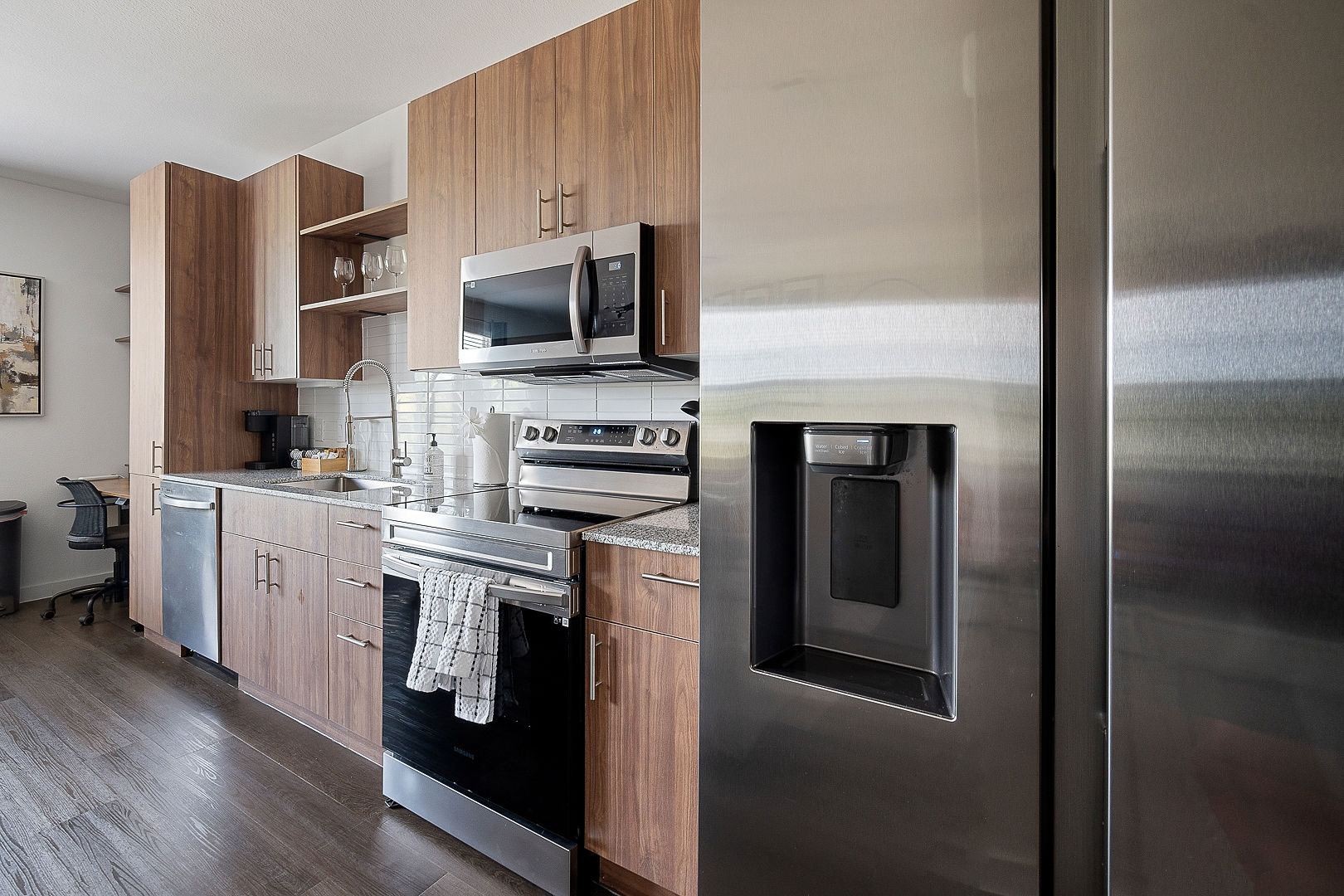
Eating out every night is a recipe for the "relocation slump." Our apartments feature fully stocked, gourmet kitchens. By providing a space where employees can actually cook healthy meals and enjoy a high-quality coffee (thanks to our in-room gourmet coffee makers), you are supporting their physical health and energy levels.
Seamless Integration
Nothing kills productivity like "move-in friction." Waiting for the Wi-Fi guy, finding a grocery store, or figuring out how to work the TV are all drains on an employee's time.
PBD Living removes these hurdles through a seamless online portal. Everything: from streaming services to on-demand grocery delivery and pet sitting: is managed for them. This allows your team to focus 100% on their role from day one.
The CFO’s Perspective: A Data-Driven Summary
For the operations and finance leaders, the numbers tell the story. If wellness-focused housing costs an additional $50 per night compared to a budget hotel, but increases an executive's productivity by just 5% (a conservative estimate based on current productivity data), the investment pays for itself in less than two weeks.
The 2026 Wellness Housing Checklist for HR:
Environmental Monitoring: Are there sensors for air and water quality?
Non-Toxic Standards: Are sustainable cleaning products the default?
Mental Well-being: Is there a virtual concierge to handle life's "small stresses"?
Turnkey Comfort: Are high-quality linens and full kitchens included to promote better sleep and nutrition?
Making the Switch
The companies that win the talent war in the latter half of this decade won't be the ones with the biggest offices: they’ll be the ones that care the most about how their people live.
Housing is no longer just a place to sleep; it’s a performance-enhancing environment. By choosing a partner like PBD Living, you aren't just booking a room: you’re investing in your company’s most valuable asset: your people.
Ready to upgrade your relocation strategy? Book your next stay or request a quote here.

Comments