
The Hub-and-Spoke Workforce Is Here: Flexible Housing Is Your Competitive Edge

The traditional corporate office was built around a simple assumption: employees would live near headquarters, work there most days, and remain in the same location for years.
That assumption is no longer reliable.
Today, companies are building smaller central hubs, supporting distributed teams, and sending project groups into key markets only when the work requires it. Dallas is one of those markets. A team may arrive for a product launch, client engagement, implementation, training program, construction project, or market expansion: and stay for several weeks or months before moving on.
This is the hub-and-spoke workforce model. The hub provides leadership, culture, and large-scale collaboration. The spokes are flexible locations where teams work, meet clients, and execute locally.
But there is another piece of infrastructure that leaders and procurement teams need to consider: where those employees live while they are working from a spoke.
Flexible furnished housing is no longer simply a travel perk. It is an operational tool: and a competitive advantage.
What the hub-and-spoke workforce model really means
In a hub-and-spoke model, a company maintains a central workplace or headquarters while using smaller offices, coworking spaces, client sites, remote work, and temporary locations to support employees closer to where work happens.
The approach offers more flexibility than a single-office model without requiring a company to become entirely remote.
A Dallas assignment, for example, might involve:
A six-person implementation team working on-site for 60 days
A group of engineers supporting a customer deployment for three months
A leadership team visiting for a week of planning and client meetings
A rotating group of consultants moving through the market for project phases
Employees temporarily relocating while a Dallas office or facility is established
These employees do not necessarily need permanent Dallas addresses. They need a reliable base for the duration of the assignment.
That distinction matters. A hotel room can provide a bed, but it rarely provides the space, privacy, kitchen, comfort, and continuity that help people perform at their best during an extended stay. A traditional apartment lease, meanwhile, creates too much commitment for an assignment that may change.
Flexible housing fills the gap between the hotel and the long-term lease.
The hidden weakness in many flexible workforce strategies
Companies have become much more thoughtful about flexible offices. They analyze desk utilization, negotiate coworking agreements, and develop policies for remote and hybrid work.
Housing is often handled less strategically.
Employees are sent to Dallas with instructions to “book a hotel” or find a short-term rental. That may work for a few nights. It becomes more complicated when the assignment lasts 30, 60, or 90 days.
The problems accumulate quickly:
Hotel costs can become difficult to justify over multiple billing cycles
Employees have limited space to work and decompress
Teams may be scattered across different properties
Kitchens and laundry facilities may be unavailable or inconvenient
Pets and family members may not be accommodated
Extensions require renegotiation or last-minute rebooking
Procurement must manage inconsistent vendors, invoices, and service levels
Employees lose time dealing with housing issues instead of project priorities
The result is operational friction. A workforce can be flexible on paper while still being slowed down by inflexible housing.
Housing is the enabling infrastructure for temporary teams
A hub-and-spoke strategy depends on mobility. People need to move into a market without requiring the company to establish a permanent footprint there.
That makes housing part of the model’s enabling infrastructure.
A fully furnished apartment gives employees a consistent home base with the essentials already in place: a real kitchen, separate living and sleeping areas, reliable internet, stocked housewares, quality linens, and room to work or relax. It also gives teams the option to live near one another without forcing everyone into a single hotel environment.
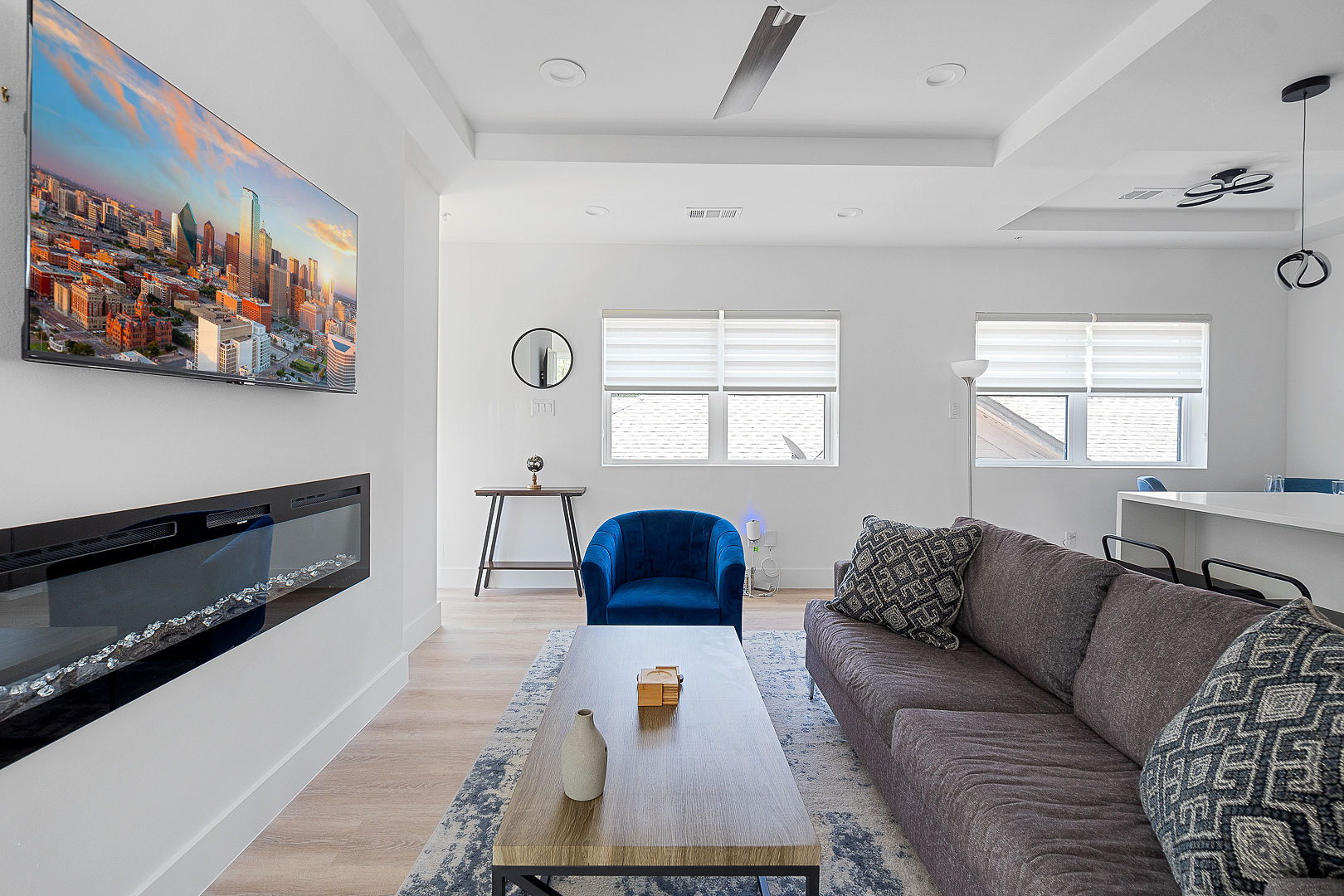
For corporate leaders, the value extends beyond comfort. A well-designed temporary housing program can support:
Faster deployment
Employees can arrive, unpack, and begin work without waiting for furniture deliveries, utility setup, or household essentials. That is especially important when an assignment begins on short notice.
Better productivity
A dedicated living space is more functional than a hotel room for multi-week work. Employees can prepare meals, take private calls, maintain routines, and separate work from rest.
Improved retention
Extended assignments are demanding. Providing a comfortable, well-managed home base signals that the company takes employee well-being seriously.
More predictable spending
A furnished apartment can consolidate housing-related expenses into a clear monthly rate. Depending on the assignment, it may be more practical than booking multiple hotel rooms or reimbursing a series of disconnected expenses.
Greater geographic reach
Companies can place teams in Dallas when the opportunity requires it: without signing a long-term office lease or asking employees to relocate permanently.
Procurement should buy flexibility, not just rooms
For procurement teams, the key question is not simply, “What is the nightly rate?”
The better question is: How much operational flexibility does this housing partner provide?
A useful corporate housing agreement should account for the realities of project work:
Assignment dates may shift
Team size may change
One employee may need to extend while another leaves
A project may pause and restart
A company may need several apartments at once
Employees may have different bedroom, pet, or accessibility requirements
Billing may need to move from individual reimbursement to corporate invoicing
The most effective provider acts as an extension of the company’s operations team. Procurement gets one point of contact, consistent service standards, and a repeatable process. Employees get a smooth experience. Local managers can request housing without starting from scratch every time.
This is where flexible housing can become a competitive edge rather than another vendor category.
Why assignment changes should not create disruption
The hub-and-spoke model is built around changing demand. Housing should be built the same way.
A rigid provider may require a new search, new paperwork, and a new move every time an assignment changes. That creates unnecessary disruption for employees and administrative work for the company.
A flexible partner should instead help manage transitions such as:
Extending a stay by 30 days
Moving an employee from a studio to a one-bedroom apartment
Adding a second apartment for a new team member
Coordinating staggered arrivals and departures
Supporting a transfer between Dallas-area locations
Arranging cleaning, grocery delivery, or other services during the stay
PBD Living is designed for this kind of changing assignment. Our furnished apartments in the Dallas area offer flexible lease options, with month-to-month arrangements available and 30 days’ notice for residents who need to change plans. That allows companies to accommodate evolving project timelines without forcing employees into unnecessary moves or long-term commitments.
The objective is simple: the work can change without the housing becoming a problem.
A better Dallas assignment playbook
Companies adopting this model can make flexible housing part of their workforce planning from the beginning.
1. Identify recurring assignment patterns
Review the types of work that bring employees to Dallas. Look at typical duration, team size, neighborhoods, start dates, and extension frequency.
2. Create housing tiers
Not every assignment requires the same solution. Develop guidelines for short visits, multi-week stays, family relocations, rotational assignments, and team deployments.
3. Establish a preferred partner
A master relationship with a local furnished housing provider can reduce sourcing time, simplify approvals, and improve consistency across assignments.
4. Define service standards
Specify expectations for furnished units, internet, utilities, cleaning, maintenance response, billing, pet policies, and employee support.
5. Measure total program value
Track more than rent. Consider booking time, employee satisfaction, relocation delays, administrative effort, hotel alternatives, and the cost of moving employees between properties.

The employee experience is part of the business case
A flexible workforce strategy can only succeed if employees are willing and able to move with the work.
That does not mean every assignment has to feel like a vacation. It does mean the company should remove avoidable stress wherever possible.
PBD Living apartments are furnished with the essentials employees need from day one, including fully equipped kitchens, high-quality linens, gourmet coffee makers, streaming services, and thoughtful household details. Residents also have access to 24/7 virtual concierge support and optional services such as grocery delivery, pet sitting, and cleaning.
Wellness is another important consideration during extended travel. PBD Living incorporates environmental sensors for air and water quality and uses sustainable cleaning products to support a healthier living environment.

These details matter because the home base influences how employees recover between demanding workdays. It can affect whether they cook or rely on takeout, whether they sleep well, whether they feel settled, and whether they view the assignment as manageable.
Flexible housing is a strategic advantage
The post-pandemic workforce is not returning neatly to one office, one city, or one lease structure.
Companies that compete effectively will be able to assemble teams quickly, place them where the work is, and support them with infrastructure that adjusts as conditions change. Flexible workspace is one part of that strategy. Flexible housing is another.
For corporate leaders, the benefit is agility without sacrificing employee experience.
For procurement, it is control without overcommitting to fixed capacity.
For employees, it is the ability to do demanding work in a comfortable, functional home rather than an improvised temporary setup.
The hub may anchor the organization. The spokes may extend its reach. But flexible housing is what makes temporary presence in those markets practical.
When your next Dallas assignment changes from 45 days to 90: or from two employees to eight: you should not have to rebuild the housing solution from the ground up.
With PBD Living’s flexible corporate housing options, your team can arrive to a fully furnished Dallas-area apartment, receive ongoing support, and adjust its stay as the work evolves. Explore available stays or learn more about PBD Living and build a housing strategy that keeps your workforce moving forward.

Comments