
Emergency Housing That Respects the Claim: How Insurers Keep Families Comfortable

When a home becomes unlivable after a fire, water loss, storm, or another covered event, families need more than a room for the night. They need a safe place to sleep, prepare meals, work, care for children, and keep their routines as intact as possible.
Insurance adjusters and third-party administrators face a similar challenge from the other side: arrange appropriate housing quickly, stay within policy limits, document every expense, and keep the claim moving without creating additional administrative work.
That is where a responsive temporary-housing partner can make a meaningful difference. PBD Living helps insurers, TPAs, adjusters, and displaced families find comfortable, turnkey furnished housing in Dallas-area locations: with flexible terms that can adapt as the claim progresses.
Temporary housing is more than a booking
Emergency lodging is often the first priority. A hotel may be the right short-term solution immediately after a loss, especially when a family needs shelter the same day. But hotel rooms can become difficult and expensive when the displacement lasts for weeks or months.
Families may be dealing with:
Limited or no kitchen access
Multiple rooms needed for children or extended family
Pet restrictions
Frequent moves or extensions
Laundry, parking, and transportation challenges
Work-from-home responsibilities
Uncertainty about when repairs will be complete
A furnished apartment can provide a more stable next step. Instead of moving from one hotel room to another, policyholders can settle into a home-like environment with bedrooms, living areas, dining space, a full kitchen, housewares, linens, utilities, and internet.
The goal is not to create a luxury upgrade unrelated to the claim. It is to provide a reasonable, safe, and comfortable temporary home that reflects the family’s needs while respecting the policy’s coverage and budget.
According to the National Association of Insurance Commissioners, Additional Living Expenses: often called ALE or Loss of Use coverage: typically apply to costs above a policyholder’s normal living expenses when a covered event makes the home uninhabitable. Policies may include both dollar and time limits, so every placement should begin with a clear understanding of the available coverage.
Speed matters: especially on day one
A displaced family should not have to wait several days for basic housing while an adjuster searches across disconnected vendors. Fast placement can reduce stress, prevent unsafe arrangements, and help the claim start on solid footing.
PBD Living works with insurance professionals and TPAs to support same-day placements when suitable inventory is available and the placement falls within the approved policy caps. A streamlined process can include:
Receiving the claim details and housing request
Confirming household size, location, accessibility, and pet needs
Reviewing the approved daily, monthly, or total ALE budget
Presenting an appropriate furnished-housing option
Coordinating move-in details and documentation
Providing a single point of contact throughout the stay
Same-day does not mean skipping important checks. The placement still needs to be appropriate for the household, reasonably priced, available for the expected term, and approved according to the carrier’s process.
For families, speed means a faster return to normal routines. For adjusters, it means fewer urgent calls, fewer temporary hotel extensions, and a clearer record of how housing was arranged.
A comfortable home can improve the claims experience
The emotional impact of a covered loss can last long after the initial emergency. Families may be managing damaged belongings, contractor schedules, school disruptions, work interruptions, and financial uncertainty all at once.
A comfortable temporary home cannot erase those challenges, but it can remove several daily burdens.
PBD Living apartments are designed to be ready for arrival, with furnishings and essential household items already in place. Depending on the property, residents may have access to:
Fully furnished living, dining, and sleeping areas
Complete kitchens with cookware and utensils
High-quality linens
Gourmet coffee makers and stocked essentials
Streaming services on televisions
Utilities and internet
Flexible-stay terms
Pet-friendly options
Virtual concierge support
Optional cleaning and other specialty services
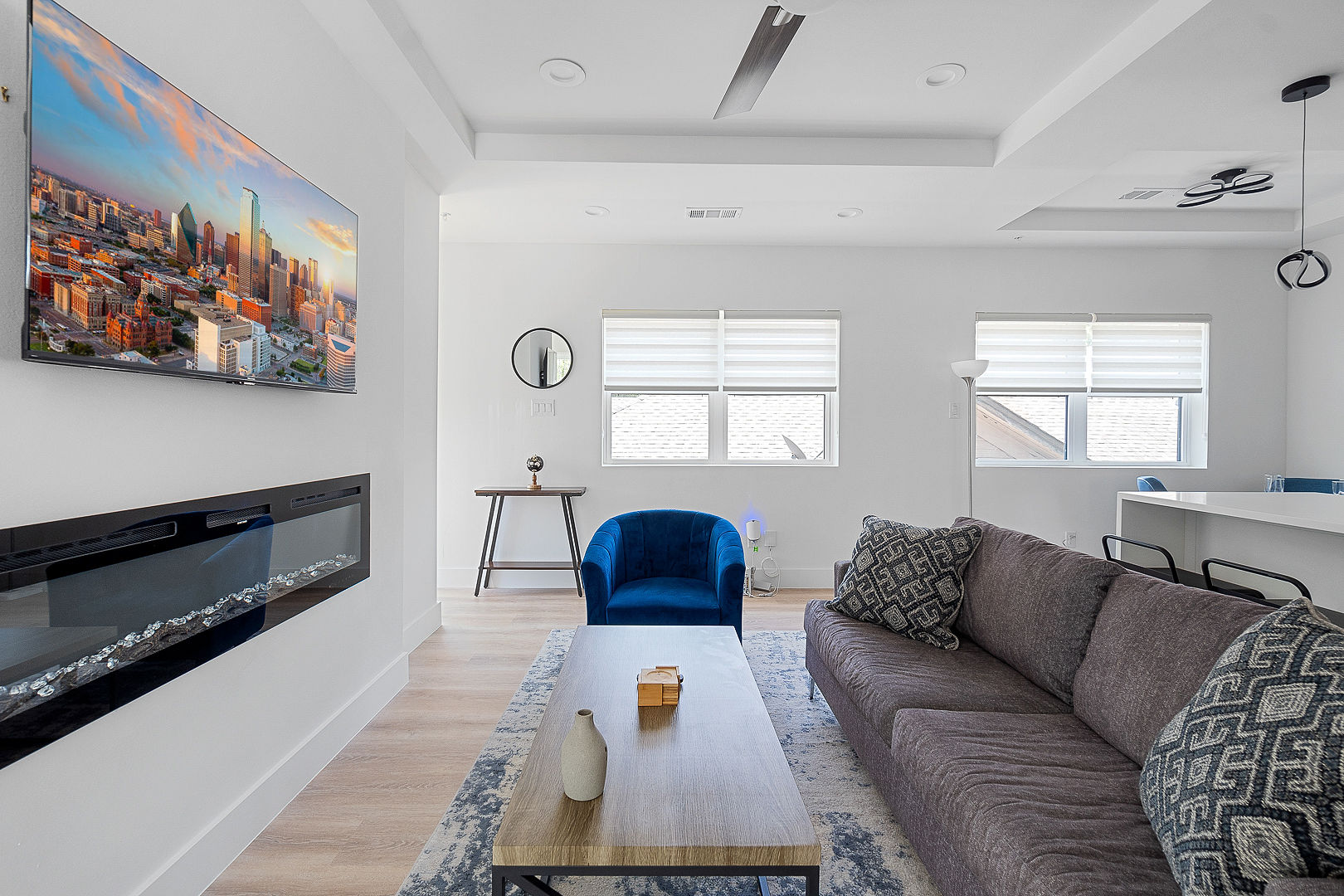
For policyholders, these details provide dignity and predictability during an uncertain period. For insurers, they can help reduce dissatisfaction by making the temporary placement feel considered rather than improvised.
Pet-friendly options prevent another family crisis
Pets are part of the family, yet hotel policies, apartment restrictions, and emergency shelters may not accommodate them. If a temporary housing provider cannot accept pets, families may face additional costs for boarding or may be separated from their animals during an already stressful event.
That is why pet needs should be identified during the first housing conversation: not after a placement has been made.
PBD Living offers pet-friendly housing options at many locations, subject to property rules and availability. Adjusters and TPAs can provide the relevant pet information up front, including the number and type of pets, so the housing search is more accurate from the beginning.
Keeping a family and its pets together can support emotional well-being while also simplifying logistics and reducing the need for separate pet-care arrangements.
Itemized invoices make claims easier to manage
Fast housing is valuable, but clear documentation is what helps the claim remain organized.
A housing partner should provide invoices that make it easy for an adjuster or TPA to verify what was billed, for which dates, and under which claim. Each invoice should be itemized rather than presented as a single unexplained total.
Useful invoice details may include:
Policyholder or household name
Claim number
Property or unit address
Dates covered by the invoice
Base lodging or rental charge
Furniture or furnishing charges, if applicable
Utilities
Parking
Cleaning or approved specialty services
Taxes or other applicable charges
Credits, adjustments, and prior payments
Total amount due
Including the claim number on every invoice is a small operational detail with a major practical benefit. It helps prevent documents from being misfiled, reduces back-and-forth emails, and gives the claims team a reliable audit trail.
The NAIC explains that policyholders should keep receipts for additional costs, while the California Department of Insurance highlights the importance of retaining bills and receipts associated with relocation. Requirements vary by policy and jurisdiction, but the general principle is consistent: good documentation supports accurate reimbursement.
Flexible terms should follow claim progress
Repair timelines rarely stay perfectly predictable. A family may initially expect to return home in 30 days, only to discover hidden damage, permitting delays, material shortages, or additional remediation work.
A rigid lease can create problems for everyone. The policyholder may be forced to pay for unused time or move again before repairs are complete. The adjuster may need to process avoidable changes, extensions, or relocation expenses.
Flexible furnished-housing terms can better reflect the reality of a claim. A placement may begin with a shorter initial term and then be extended as the repair schedule becomes clearer. Alternatively, the family may transition from an emergency hotel stay into a furnished apartment for the longer portion of the displacement.
PBD Living’s temporary-housing services include flexible lease options and furnished one-, two-, and three-bedroom apartments. Housing can be selected based on household size, budget, location, and anticipated duration: then adjusted as the claim develops.
All changes should remain subject to carrier approval, policy limits, availability, and the terms of the housing agreement.
One partner can reduce adjuster workload
Adjusters should be focused on coverage decisions, damage assessment, communication, and resolution: not spending hours coordinating furniture, utilities, access instructions, and invoice corrections.
A dependable temporary-housing partner can centralize those details by offering:
One point of contact
Clear placement information
Coordinated move-in communication
Responsive support during the stay
Itemized billing tied to the claim
Flexible extension or move-out coordination
Options for pets and larger households
This structure is especially helpful for TPAs and carriers handling multiple claims across different locations. Instead of building a new housing solution from scratch for every displaced household, teams can use a consistent workflow and a partner familiar with the expectations of insurance-related placements.
To learn more about available accommodations or discuss a housing need, contact PBD Living.
A practical checklist for insurance-related placements
For adjusters and TPAs
Before confirming a placement, verify:
The claim number and policyholder contact information
The home’s habitability status
Approved ALE or Loss of Use limits
Daily, monthly, and total budget parameters
Household size and bedroom requirements
Pet, accessibility, school, and work-location needs
Expected initial term and possible extension process
Required billing format and payment instructions
Who will handle changes, maintenance, and resident questions
For displaced families
Ask your insurer or housing coordinator:
What is my ALE or Loss of Use limit?
Are there daily or total housing caps?
Which costs are approved?
How should I submit receipts?
Can my temporary housing include my pets?
What happens if repairs take longer than expected?
Who should I contact if I need an extension or maintenance support?
The FEMA guide to sheltering and housing assistance also explains several forms of disaster-related lodging and temporary housing assistance. FEMA programs and private insurance coverage are different, so families should confirm how benefits coordinate and avoid assuming that one program covers every expense.
The right temporary home supports everyone
Emergency housing should respect both sides of the claim. Families deserve a clean, comfortable, safe place to live while their home is repaired. Adjusters and TPAs need speed, budget discipline, clear communication, and documentation they can use immediately.
PBD Living brings those priorities together with turnkey furnished apartments, flexible terms, pet-friendly options, responsive support, and claim-ready billing. When temporary housing is handled thoughtfully, it becomes more than a short-term shelter solution: it becomes a practical part of helping families recover with less disruption and helping claims teams work more efficiently.
Comments